Valorant on Console in 2026: A Player’s Practical Guide
Valorant console opens on PS5 and Xbox with shared Riot account progression, separate PC/console queues, and a scheduled map pool.
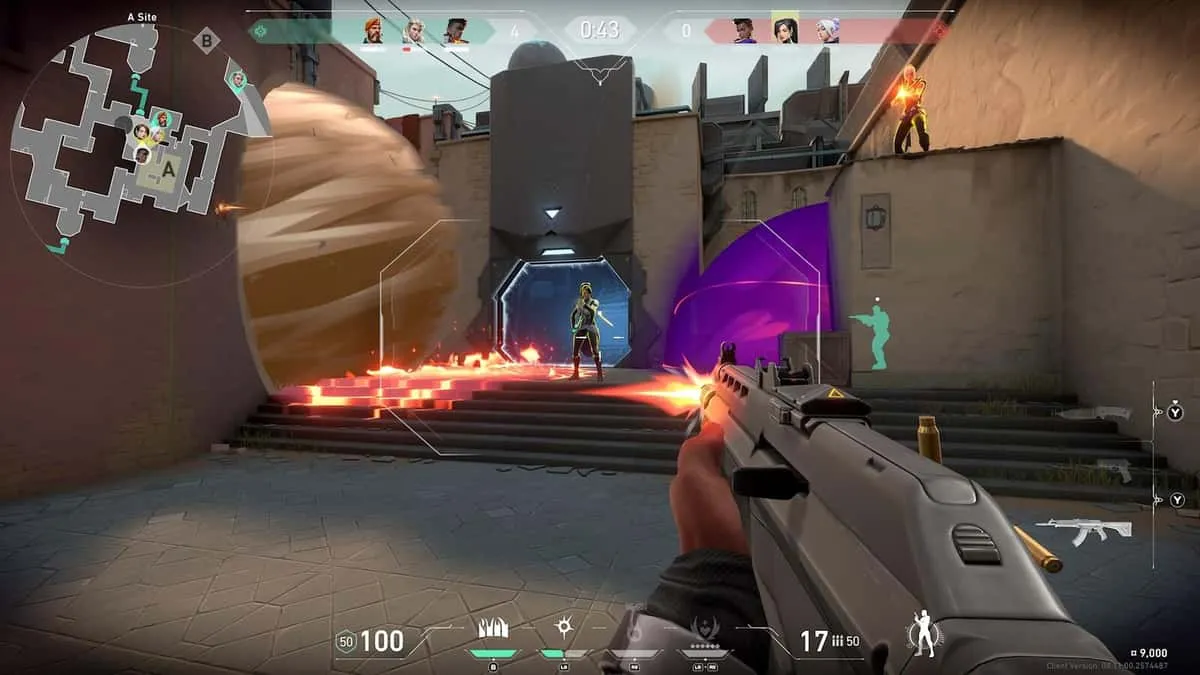
From a player's seat, Valorant on console is less a novelty port than a second front door into the same house. In 2026, the console version is long past its 2024 beta and full release, and the practical questions are simple: where can a player install it, what carries over, how does the competition split between PC and console, and which maps and modes greet them? The answers are friendly to newcomers, though they come with a few sharp edges worth knowing before queuing.
🎮 Where the door opens
The console release began in select regions: United States, Canada, United Kingdom, Europe, Brazil, and Japan. It runs on PlayStation 5 and Xbox Series X|S. Riot Games signaled that more regions could follow, so a player outside that list should check the current digital storefront and wishlist the game on their preferred console to receive a notification if it appears. Downloading is handled through the console's own storefront. The old closed-beta code gate is gone: Riot opened the beta on July 26, 2024, and moved to full release on August 2, 2024. In 2026, a player simply installs and starts, assuming their region is supported.
That regional rollout is like a passport with a short list of stamps: the destination is real, but not every border is open yet. A player should not mistake a missing store page for a broken download; it is usually a regional availability question.
🧭 One account, three stages
The most player-friendly detail is account continuity. Console and PC do not crossplay in competitive matches, a choice Riot made for competitive integrity. A controller player will not be dropped into a PC lobby, and a PC player will not be pulled into a console match. But the account itself travels. If a player signs into the same Riot account, inventory and progression are shared across PC, Xbox Series X|S, and PS5. Skins and agents arrive simultaneously across platforms, and patches and live-service features follow the same broad schedule.
This shared inventory behaves like a theater company's wardrobe: one collection follows the account across three stages, even when the performers are not allowed to share the same stage at once. A player can therefore switch hardware without losing their agent unlocks, weapon skins, or account progress. Progression is tied to the Valorant account and tracked across devices.
🗺️ Maps: a timetable, not a mystery
At console launch, the map pool for Unrated, Swiftplay, Ranked, and Deathmatch unfolded on a schedule. It was as precise as a night train timetable: each station opened on a date, and players learned the route one stop at a time.
| Date | Map added | Notes |
|---|---|---|
| June 14 | Abyss, Ascent, Bind, Haven | Haven returned to the pool via patch 8.11; Breeze and Split rotated out |
| June 25 | Sunset | Arrived with patch 9.00 and Ranked play |
| July 16 | Lotus | Followed the June wave |
| July 30 | Icebox | Added with the 9.02 update |
Team Deathmatch maps are also part of the console picture: District, Kasbah, Piazza, and Drift are playable. If a player wants a map omitted from the standard pool, Custom Games is the escape hatch. That matters because map comfort is a huge part of early console success; a player who only ever sees the ranked rotation can forget how much variety lives outside it.
🧠 Modes and the first steps
The console version's mode set includes Unrated, Swift Play, Deathmatch, Team Deathmatch, Custom Games, and Competitive. For a new player, the order matters. Unrated and Swift Play are low-pressure ways to learn agent abilities and map timing. Deathmatch and Team Deathmatch sharpen aim and movement without objective pressure. Competitive is the deep end, and it rewards patience. Custom Games are useful for testing a map or warming up with friends.
Riot also introduced a Basic Training Tutorial for console players. It walks through shooting, agent abilities, match format, and other fundamentals. A player who skips it is not doomed, but the tutorial is a sensible first lap around the track before entering traffic. Controller settings and crosshair choices are the next layer: a player hunting an edge will want to tune sensitivity and find a reticle that stays readable in messy fights. Many players borrow pro crosshairs as a starting point, then adjust.
✅ The practical bottom line
In 2026, Valorant on console is a mature enough proposition that a player can treat it as a real home rather than a tourist stop. The caveats are clear: regional availability is limited to the announced markets, PC and console competitive pools stay separate, and the account is the true center of gravity. The rewards are equally clear: shared inventory, shared progression, simultaneous skins and agents, and a mode list that covers casual warmups through ranked pressure.
A player who wants to start should confirm regional store availability, install on PS5 or Xbox Series X|S, sign into the same Riot account they use elsewhere, and begin with Unrated or Swift Play before touching Competitive. The console port does not ask for a leap of faith; it asks for a sensible setup. Once that is done, the real work begins: learning the maps, calming the crosshair, and remembering that competitive integrity is why the PC and console queues remain separate rooms in the same house.