Tung Tung Tung Sahur Cheater Terrorizes Valorant as Riot Responds
A viral Valorant cheater becomes evil Tung Tung Tung Sahur, exposing wallhacks and raising fresh anti-cheat concerns for Riot and esports.
A bizarre Valorant cheater has gone viral after transforming into an evil version of Tung Tung Tung Sahur and wiping out entire enemy teams within seconds, turning a brainrot meme into a tactical-shooter nightmare. The footage, shared by Valorant Tactic, appears to be recorded from the cheater’s perspective, with a dark Tung Tung model replacing the standard first-person weapon display. Instead of a rifle or pistol, viewers see the wooden internet icon leading the charge as enemy silhouettes appear through walls and multicolored targeting lines stretch across the map. The player then rapidly eliminates all five opponents for an ace. In a second match on a different map, the same scene repeats: Tung Tung races toward the opposing team, the kill feed fills almost instantly, and another ace lands. 🪵🎯
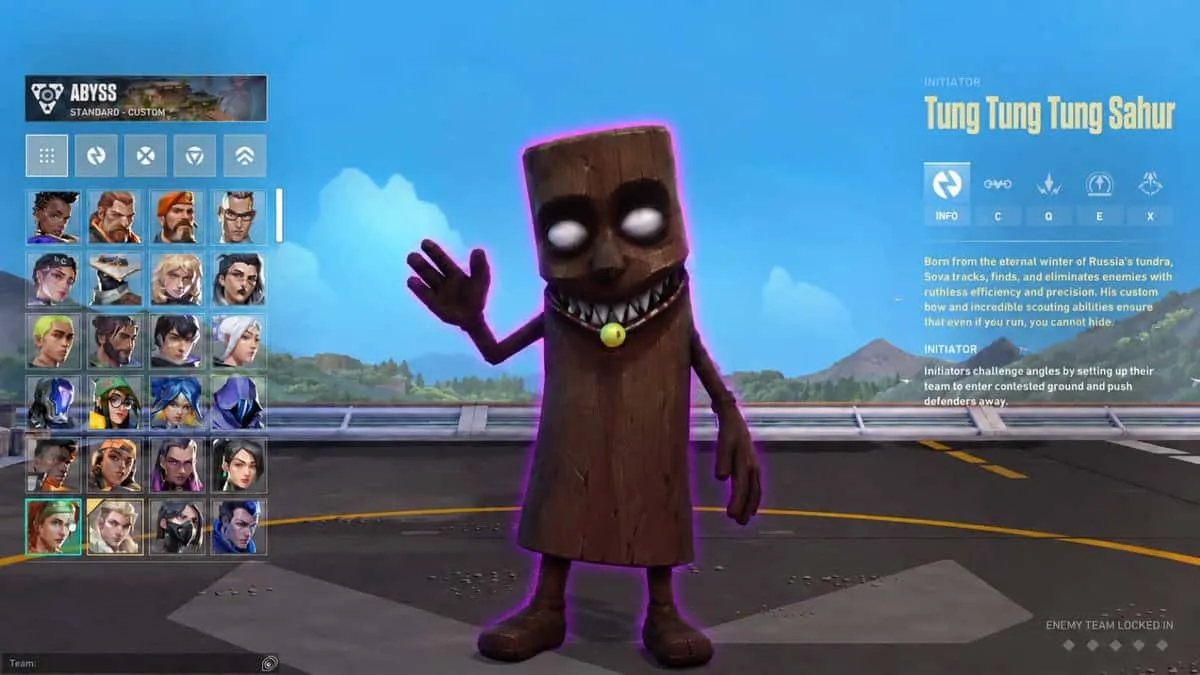
While the clip clearly suggests wallhacks and automated targeting, the exact software remains unknown. It is also unclear whether the Tung Tung model was visible to other players or existed only on the cheater’s screen. That ambiguity has done little to slow the video’s spread, because the image of a meme character casually dismantling a competitive lobby is exactly the kind of absurdity that social media loves. The internet’s favorite wooden menace did not exactly sneak in quietly.
The clip gained more attention when Valorant analyst vladk0r reposted it with the caption: 'kernel level anticheat vs tung tung tung cheat-hur.' The post was a direct response to Valorant Esports President Leo Faria, who had been addressing competitive integrity concerns as more VCT competition moves online in 2027. Faria said all the same protections still apply, including kernel-level anti-cheat, and that players caught cheating in online qualifiers could be barred from competing in the VCT.
Vladk0r later raised a more serious concern about teams encountering cheaters during a tournament bracket. He wrote that imagining losing to a team with this only for them to be banned later after a few rounds of the bracket shows the damage could already be done by the time Riot disqualifies the offending team. That argument cuts deeper than any meme. A ban after the match does not restore the loss, the momentum, or the bracket path. For professional and semi-professional players, a single corrupted series can end a season. 🚨
Riot recently introduced an optional on-demand mode for Vanguard, its controversial kernel-level anti-cheat system. The developer has also acknowledged that it is encountering more cheating assets than ever before as AI coding tools make cheats easier to create. However, Riot maintains that Vanguard can keep pace by detecting the methods used to inject cheats into a computer rather than attempting to identify each individual program. It is a subtle but important distinction: Riot wants to catch the delivery system, not play whack-a-mole with every new cheat menu.
Riot Anti-Cheat Director Phillip Koskinas has now responded to the viral footage, confirming that the account involved had already been banned before the clip exploded online. In a September 9 post, Koskinas identified the account as FaeL o Anacondo#br1 and said it was banned on September 3 after playing three games. He referred to the cheat as Sysinfo and dismissed it as lowskill vibeslop. Hiding the Riot ID is pointless, Koskinas wrote. We can detect anything with time, but VAL is a free to play game. The account was therefore banned six days before the footage went viral. However, Koskinas also agreed that Riot needs to improve its pre-emptive protections for open qualifiers, directly addressing concerns about cheaters potentially disrupting tournament brackets before being detected.
| Date | Event |
|---|---|
| September 3 | Account FaeL o Anacondo#br1 banned after three games |
| September 9 | Koskinas responds; footage goes viral |
| 2027 | More VCT competition moves online, raising integrity stakes |
The strange case of Tung Tung Tung Sahur in Valorant is funny until it is not. On one level, it is a perfect 2026 gaming story: an AI-generated meme, a free-to-play shooter, a kernel-level anti-cheat, and a cheat so theatrical that it looks like performance art. On another level, it exposes the fragile trust that competitive games depend on. Vanguard may not be sleeping, but it has a public relations battle on its hands. Every viral cheat clip makes players ask whether their ranked matches are real, and every delayed ban makes tournament organizers look vulnerable.
Riot’s defenders point out that the account was banned quickly, at least by the calendar. Three games is not nothing. But the viral clip arrived after the ban, which means the punishment did not stop the footage from spreading or the meme from landing. The cheater may have lost an account, but the internet won a new horror-comedy villain. Meanwhile, pros and aspiring pros are left with a colder question: what happens when the same trick appears in an open qualifier, where a single map can decide a year of work? 🧠
The answer, for now, is a mix of automated detection, manual review, and retroactive bans. Riot says it can detect anything with time, but time is exactly what tournament brackets do not always have. The company has acknowledged the need for stronger pre-emptive protections in open qualifiers, and Koskinas’s response suggests that the feedback is landing. Whether Vanguard can turn that acknowledgment into faster action is the real test. Tung Tung Tung Sahur may be a meme, but the cheat behind the wooden mask is a warning. In 2026, the anti-cheat arms race is no longer just about aimbots and wallhacks. It is about who can adapt first: the cheaters, the developers, or the tournament system they both threaten. 🎮