
The crisp, sterile air of Icebox bites at my senses as I navigate its industrial corridors, a digital explorer in a world of steel and snow. Yet, beneath this facade of frozen order, the map thrums with secrets—not just strategic angles, but literal cracks in reality itself. In 2026, these are not mere glitches to be patched and forgotten; they are echoes of the map’s unfinished soul, whispers from the spaces between the code. My journey here has been one of witnessing the boundaries of this virtual world dissolve, where agents’ abilities become keys to hidden doors and the very floor can become an illusion.
The Ghost in the Machine: Killjoy’s Phantom Sentry
Killjoy’s turret, that reliable mechanical companion, became something else entirely on Icebox. I remember the first time I saw it—or rather, didn’t see it. In B Kitchen, a position known only to a few, a player could place the device not on the ground, but within it. The turret would vanish from sight, becoming a phantom limb of the map itself, firing from a realm of pure data. Enemy players would frantically search for the source of the bullets chipping away at their health, their confusion a palpable force in the match. It was a glitch that felt less like an error and more like the map had developed a silent, automated immune system, attacking intruders from its very bones.
This was not a new specter. It was a memory haunting the present, a digital echo from Split that had found a new home in the ice. Back then, the subterranean turret could at least be destroyed by focused fire. Here, on Icebox, it was encased in an impervious digital sarcophagus, utterly protected. It transformed a tactical tool into an existential threat, a reminder that the rules we play by are only as stable as the code that writes them.
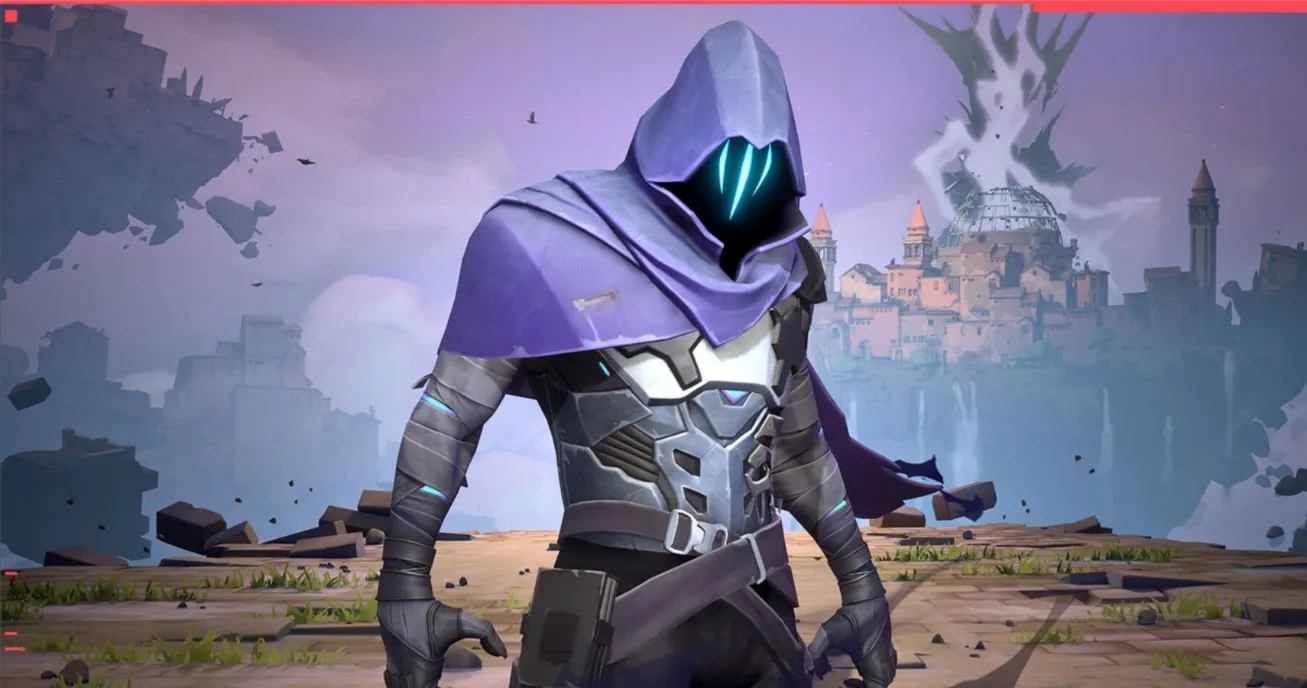
Omen’s Shadow Passage: A Teleport to Nowhere
If Killjoy’s glitch was a hidden sentry, then Omen’s was a doorway to a silent world. Through his ultimate, From the Shadows, one could slip into a space that was never meant to be. DeviBoy17 showed us the path: a teleport to a small, triangular void behind B Kitchen. This area existed in the interstitial tissue of the map, a cartographer’s forgotten margin, a blank space on the mental blueprint every player carries.
Stepping into that void was profoundly isolating. From that silent pocket, I could see the bustling pathways of B Site and the kitchen above like dioramas behind glass. I was a ghost observing the living, able to interact but fundamentally separate. It was power, yes, but of a hollow kind. Riot, in their vigilance, sealed this shadow passage, warning us to remain “ready for anything.” The phrase lingers. Were they speaking of competitive tactics, or of the map’s lingering potential to unravel?
The Unstable Geometry of a New World
Icebox, in its early days, felt less like a finished arena and more like a frozen dream still settling into shape. These exploits were the seams showing. They revealed that a map is not just art and architecture, but a complex system of rules, boundaries, and permissions. When an ability like Omen’s teleport interacts with that system in an unforeseen way, it doesn’t just break a rule—it momentarily reveals the raw, unformed potential beneath the polished surface.
The timeline of these events is telling:
| Event | Description | Status (As of 2026) |
|---|---|---|
| Killjoy Turret Glitch (Split) | Turret placed under map, could be destroyed. | Patched historically, a noted precedent. |
| Killjoy Turret Exploit (Icebox) | Turret placed under floor in B Kitchen, became invulnerable. | Patched. Remains a case study in spatial programming. |
| Omen From the Shadows Bug | Teleportation into an inaccessible void space behind B Kitchen. | Patched prior to competitive release. |
| Icebox Competitive Release | Map entered official competitive rotation. | Completed. The map is now considered stable. |
Reflections from the Frozen Edge
Playing through those early days on Icebox was a unique poetry. It was a dance not just with other players, but with the environment’s own latent quirks. The experience taught me that a game’s ecosystem is fragile. A turret becoming a geological anomaly or a teleport becoming a rend in the canvas of reality are more than bugs; they are moments where the game’s fiction and its function clash spectacularly.
Now, in 2026, Icebox stands polished and predictable in the competitive rotation. The ghosts have been exorcised, the passages sealed. Yet, I sometimes miss that early, lawless feeling. It was a reminder that the worlds we inhabit digitally are constructed, and like all constructions, they can have hidden rooms. We are told to be “ready for anything.” Perhaps that readiness isn’t just for an opponent’s play, but for the moment the map itself decides to play its own, inscrutable game.